An exploration of the Orbis collection.
The Orbis collection is built around a single form, but it’s not static. It shifts through surface, contrast, and finish, changing how it feels depending on how it’s worn and seen.
Where product descriptions focus on the piece itself, this is where I can look more closely at why it is the way it is — how the form is developed, and what sits behind the decisions that shape it.
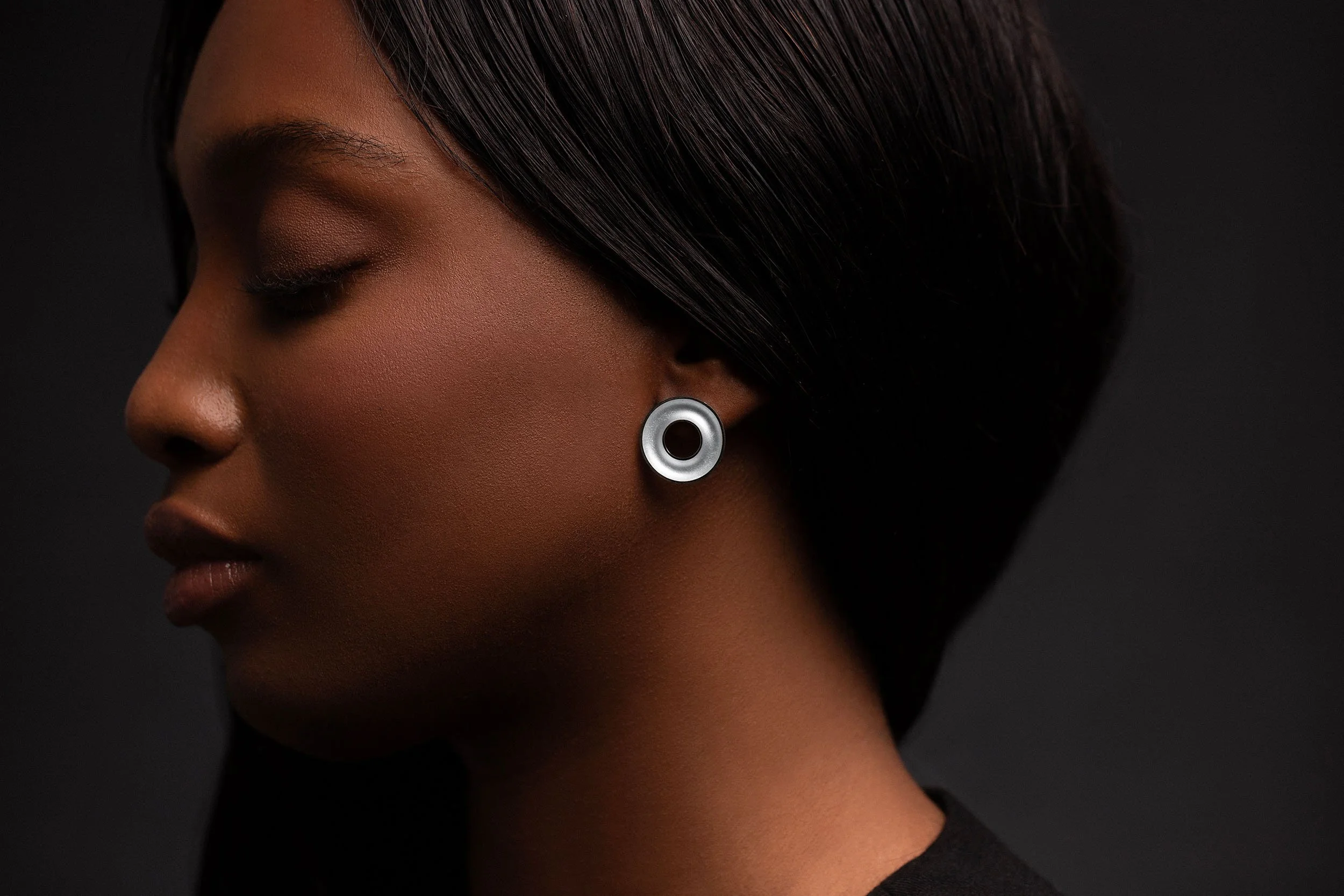
THE TORUS AS A STARTING POINT
At the centre of the Orbis collection is the torus — a continuous, circular form with no clear beginning or end. It’s a shape I return to across my work because of its simplicity and its ability to hold meaning without being fixed to one interpretation.
It’s a form that feels complete in itself. Balanced, continuous, and familiar, but still open.
WHAT ‘ORBIS’ MEANS
The name Orbis comes from Latin, meaning circle, ring, or world. It reflects both the physical form of the pieces and the idea of something whole and self-contained.
Rather than defining a fixed narrative, the name leaves space for interpretation. It connects the pieces through a shared sense of form and continuity, without telling the wearer exactly what to see.

SURFACE AND CONTRAST
What defines the Orbis collection is not just the form, but how the surface is treated.
Each piece plays with contrast:
light against dark
matte against polished
interior against exterior
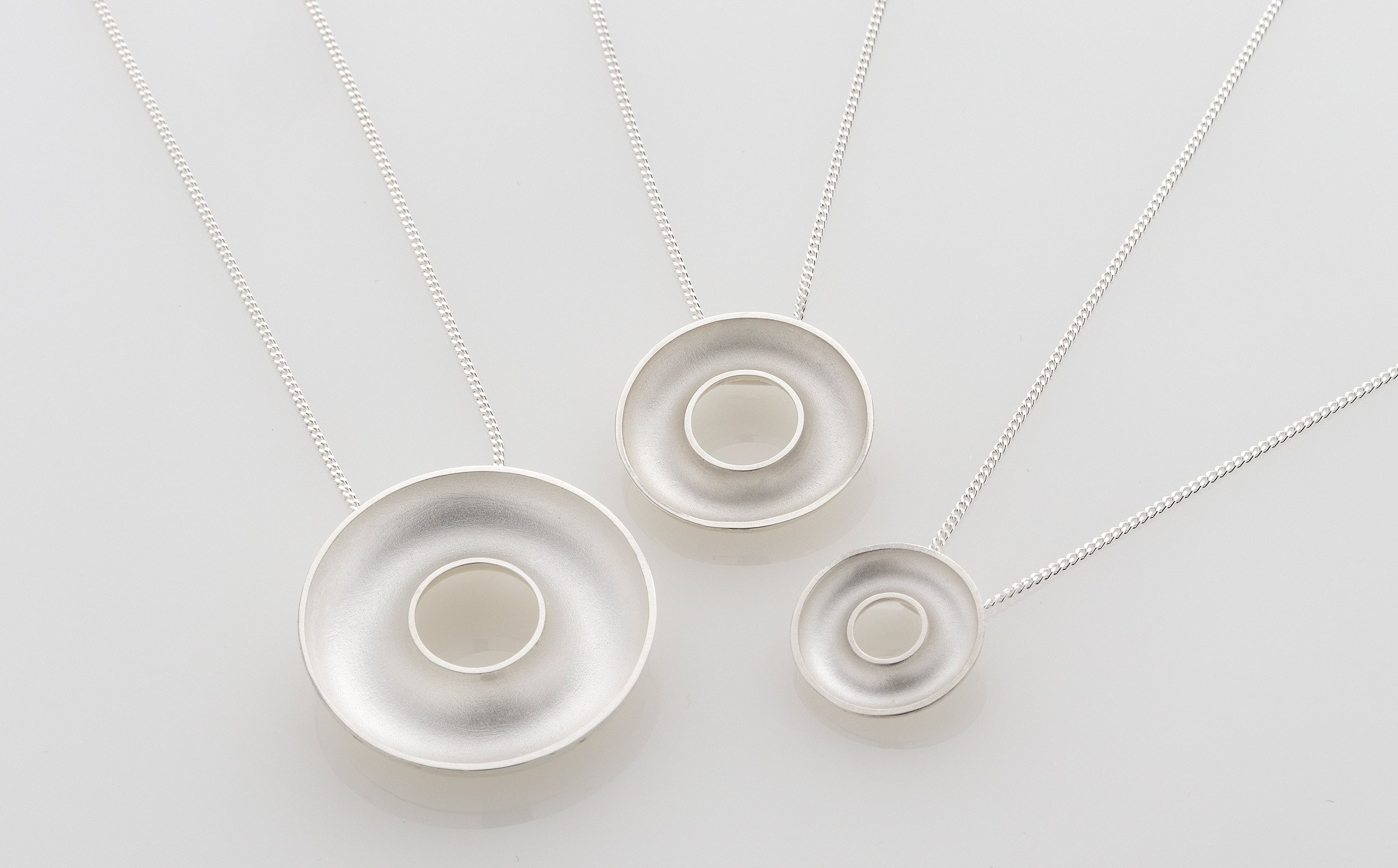
The concave surface draws the eye inward, while the polished edges reflect light outward. This creates a shift between depth and clarity, depending on how the piece moves.
The black and white finishes aren’t just aesthetic choices — they change how the form is read. The darker interior feels more enclosed and grounded, while the lighter surface feels more open and reflective.
DESIGNING FOR THE BODY
Although the form is geometric, it isn’t flat. The concave surface creates depth, which changes how the piece catches light when it’s worn.
As the body moves, the surface shifts between light and shadow. This is what gives the form its presence — not added detail, but how the surface has been shaped.
WHY ITS MADE THIS WHY
Every decision in the Orbis collection comes back to the same question: how can a simple form hold more?
By refining the surface, adjusting proportions, and working carefully with contrast, the pieces move beyond being just a circle. They become something that shifts depending on light, movement, and the person wearing them.
The Orbis collection is about exploring how much can be said through a single form.
It’s not about adding more, but about refining what’s already there — allowing small details to shape how the piece is seen, worn, and understood.